The thing no one tells you about self-consciousness and sex
Self-consciousness is not a personality trait you're stuck with. It's a nervous system state. And your nervous system responds to specific environmental and psychological cues. The moment you feel watched, judged, or exposed, your body goes into protection mode. Blood leaves your genitals. Your pelvic floor tightens. Arousal stops mid-climb.
This happens even when you're alone.
Why shame gets in the way of pleasure
Most of us grow up absorbing the message that pleasure is something you earn, perform, or justify. You learn early that your body's desires are inconvenient, embarrassing, or suspect. By the time you're an adult, you've internalized so many layers of cultural messaging that the act of touching yourself can feel transgressive, wasteful, or wrong.
Then you add a vibrator. And suddenly you feel even more watched. More visible. More like you're "doing something" instead of just being.
Here's the neuroscience: when you're in a state of shame or self-consciousness, your prefrontal cortex (the thinking, evaluating part of your brain) is overactive. You're narrating the experience instead of feeling it. You're monitoring yourself. You're checking whether you're "doing it right." That constant surveillance literally blocks pleasure signals from reaching your conscious awareness.
Start with privacy that feels absolute
I don't mean just closing the door. I mean creating a container where you're genuinely unreachable. Phone in another room. Notifications off. No possibility of interruption. Twenty minutes minimum.
Why? Because part of your nervous system is always scanning for threat. If there's even a 5% chance someone could walk in, your body knows it. And that 5% is enough to keep you in a low-level state of readiness instead of relaxation.
Lock the door. Actually lock it. Pull the curtains. Create the physical reality of being unwatchable. Your nervous system will register that and begin to downshift.
Get grounded in your body first
Before you touch anything, spend five minutes just noticing sensation. No goal. No agenda.
Feel the sheets against your skin. Notice the temperature of the room on your arms. Press your feet into the mattress. Take three slow breaths where you actually feel the air moving in and out.
This sounds like meditation filler. It's not. You're literally telling your nervous system: "I'm safe. I'm not going anywhere. We can slow down." That shift from goal-oriented ("I need to orgasm") to sensation-oriented ("What do I notice right now?") is everything.
Reframe what the vibrator is for
Here's where most people get stuck: they treat the vibrator like a means to an end. They think the goal is orgasm. So they put it on high, try to reach climax quickly, and then feel disappointed when that happens, or relieved when it doesn't (because at least the self-consciousness goes away).
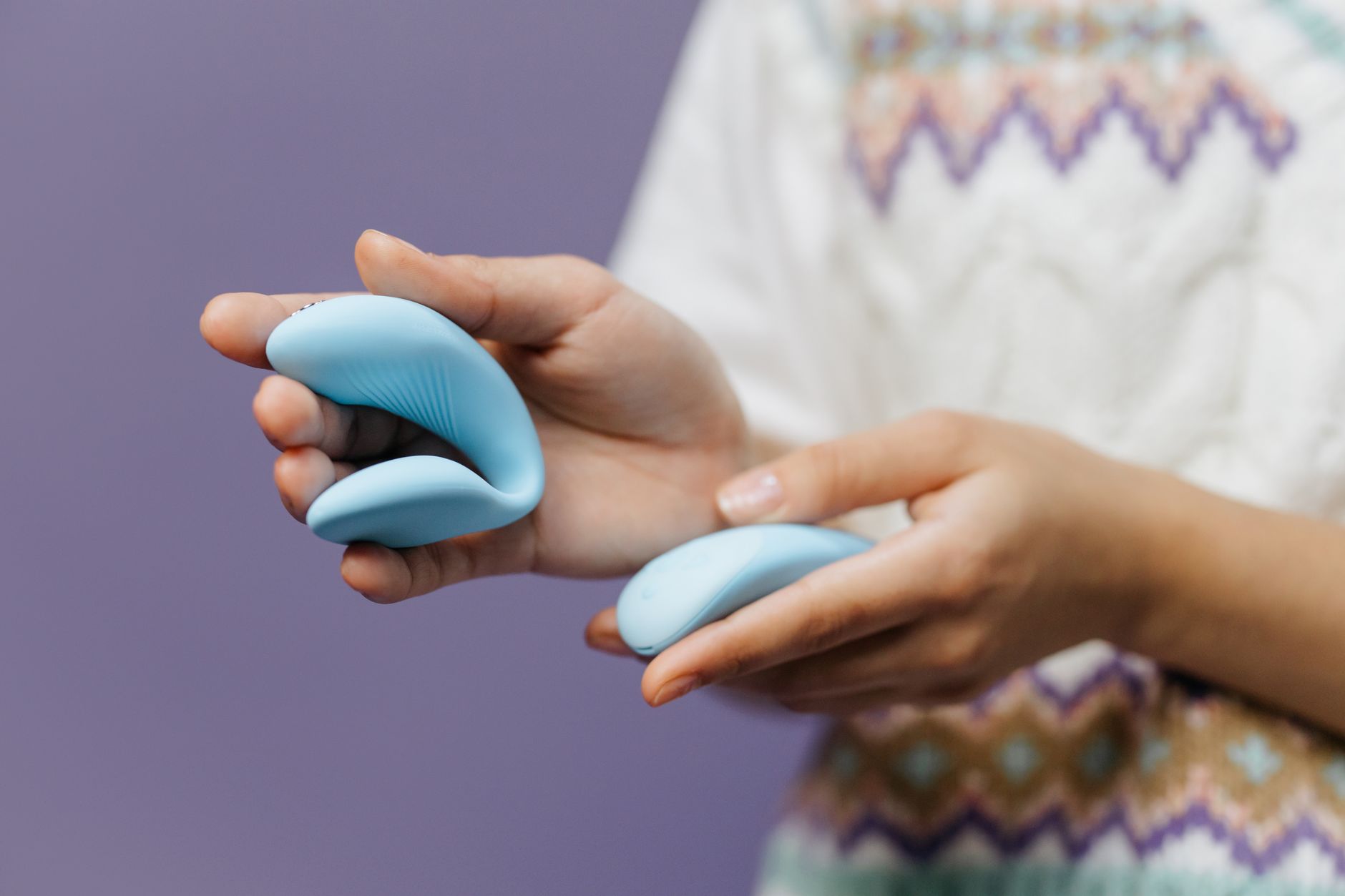
Instead, use the lemon clitoral vibrator as a tool for sensation exploration. The goal is curiosity, not outcome. You're not trying to come. You're trying to learn what feels good.
This distinction matters because it takes the pressure off. Orgasm becomes something that might happen, not something that has to happen. And paradoxically, that's usually when it actually does.
The slow-motion protocol
When you're ready to use the clitoral vibrator, start at the lowest setting. Not medium. Not half. The absolute lowest pulse the Lem vibrator offers.
Place it just off to the side of your clitoris, not directly on it. Indirect stimulation feels less intense and gives your nervous system more time to acclimate. Move it slowly. Spend two minutes on one spot. Then move it slightly. Notice whether the sensation feels warm or cool, sharp or rounded, building or constant.
The point isn't speed. It's attention. You're teaching your body that pleasure isn't about frantically chasing climax. It's about noticing what's actually there.
Many of my clients with shame histories report that this reframing is the thing that finally makes vibrators work for them. They stop performing for an imaginary audience and start experiencing their own body.
What to do when self-consciousness creeps back in
It will. You'll be halfway through and suddenly think, "This is weird. I'm alone with a vibrator. What if someone knew?" Or, "I'm taking too long." Or, "Is this even normal?"
When that happens, name it. Don't fight it. Think: "There's that thought about judgment." Then gently redirect your attention back to physical sensation. Back to the feeling of the vibrator. Back to your breath.
You're not trying to banish the thought. You're just noticing it's there and choosing to pay attention to something else. That practice rewires the pathways between shame and pleasure over time.
Build permission, not technique
The most common mistake I see is people thinking they need to figure out the "right way" to use a lemon vibrator. They research techniques. They compare their experience to others. They optimize.
What actually matters is permission. Do you genuinely believe you deserve pleasure? Not as a reward for being good, not as something to earn through a partner, but as something that belongs to you just because you exist?
That permission is what changes everything.
When you have it, the specific vibrator or technique matters less. When you don't, no vibrator will feel right. So spend the first few weeks just building the internal permission. Use the vibrator as a container for that permission work, not as a performance tool.
Why partners make it harder (and how to fix it)
If you share a bed or a home with someone, shame often gets louder because of the relational context. You're not just wrestling with your own internalized messages. You're managing real or imagined judgment from someone else.
If your partner is sleeping next to you, or you know they're in the next room, your nervous system registers that as a threat even if intellectually you know they'd be fine with it. The safest move early on: use time when they're genuinely out of the house.
Once you've built a foundation of solo pleasure without the relational variable, adding a partner back in becomes easier. But trying to rewire shame with an audience, even a supportive one, is swimming upstream.
The bridge to shared pleasure
If you want to eventually use lemon vibrators with a partner, the path is: solo exploration first, internal permission second, partner involvement third.
Don't skip the first two steps hoping that a partner's enthusiasm will fix your self-consciousness. It won't. But once you've felt what genuine, unselfconscious pleasure is like alone, you have a nervous system memory of it. That memory makes it easier to access that state again, even with another person present.
What consistency actually does
You won't rewire years of shame in one session. Or five. But something shifts around week three or four of regular exploration. Your body starts to remember what it feels like to prioritize sensation over performance. Your nervous system learns that pleasure is safe. The internal critic gets quieter.
This is not because you're "getting better at sex." It's because you're gradually changing the relationship between shame and your nervous system. Each time you touch yourself without judgment, you're telling your brain: "This is normal. I'm safe. This is mine."
That's not a small thing. That's the foundation of everything else.
The shift that matters
One day you'll realize that you've stopped watching yourself. You'll be using your Lem vibrator and you'll suddenly notice that five minutes have passed and you have no idea what you were thinking about because you were too busy feeling. That's the moment you'll know something has changed.
That moment isn't about being "good at pleasure." It's about being present in your own body. And that presence is what makes pleasure actually work.
Frequently Asked Questions
How long does it take to get past self-consciousness when using a clitoral vibrator?
Three to four weeks of consistent, pressure-free exploration is typical for noticeable shifts. Some people feel it sooner. Others need more time. The key variable isn't the vibrator or the technique. It's whether you're genuinely releasing the goal of orgasm and focusing on sensation instead. If you're still trying to perform, it'll take longer. If you can actually let that go, things shift faster.
What if I feel awkward or embarrassed even when I'm completely alone?
That's internalized shame, not something wrong with you. Start even smaller: just hold the vibrator without turning it on. Let your body acclimate to the physical object. Feel it in your hand. Notice the weight, the texture, the temperature. Spend days or weeks just doing that if needed. There's no timeline you need to meet. You're rewiring nervous system associations, and that takes the time it takes.
Can I use a lemon vibrator if I have a partner but don't want them to know?
Yes, and you don't need to tell them unless you eventually want to. Solo pleasure is yours alone. That said, shame often gets louder when you're keeping secrets. If you notice yourself feeling guiltier the more you hide it, that might be worth examining. Sometimes the shame isn't about the vibrator. It's about the hiding. But that's individual.
Does using a lemon vibrator alone make partnered sex less likely or less enjoyable?
Not at all. In fact, it's usually the opposite. People who have a strong connection to their own pleasure tend to have better partnered sex because they know what they like and can communicate it. Solo exploration builds that knowledge. It's not a substitute for partner sex. It's preparation for better partner sex.
What if I reach for the vibrator and immediately feel shame, even now?
That's a signal. Pause. Ask yourself: "Whose voice is this?" Usually it's a parent's, a culture's, or an old partner's judgment that got internalized. It's not your voice. Once you identify whose judgment it is, it gets quieter. Try saying out loud: "This is my body. This is my pleasure. That judgment doesn't belong to me anymore." That sounds hokey, but the nervous system responds to explicit permission.
Can a lemon sucker or clitoral vibrator help with shame-based numbness?
Yes. Numbness often develops as a protective response to shame. The body literally numbs out to avoid the discomfort of pleasure mixed with guilt. By creating a container of genuine privacy and permission, and using intentional tools like a Lem vibrator, you're slowly training your nervous system that sensation is safe again. That numbing gradually eases as the nervous system learns it doesn't need that protection anymore.
The real work is permission, not technique
There are a hundred blog posts about vibrator techniques. This one isn't that. Because technique doesn't matter if you're still in a state of internal judgment.
The work is giving yourself permission. Real, unshakeable permission to want pleasure. To take time for it. To prioritize your sensation over how you think you're supposed to feel.
That permission is what opens the door. The vibrator is just what you walk through it with. And once you've walked through once, shame gets harder to believe in. And that changes everything.
If you're ready to explore that permission in a deeper way, or if you need help untangling the shame around pleasure, let's talk. That's exactly what I work with.