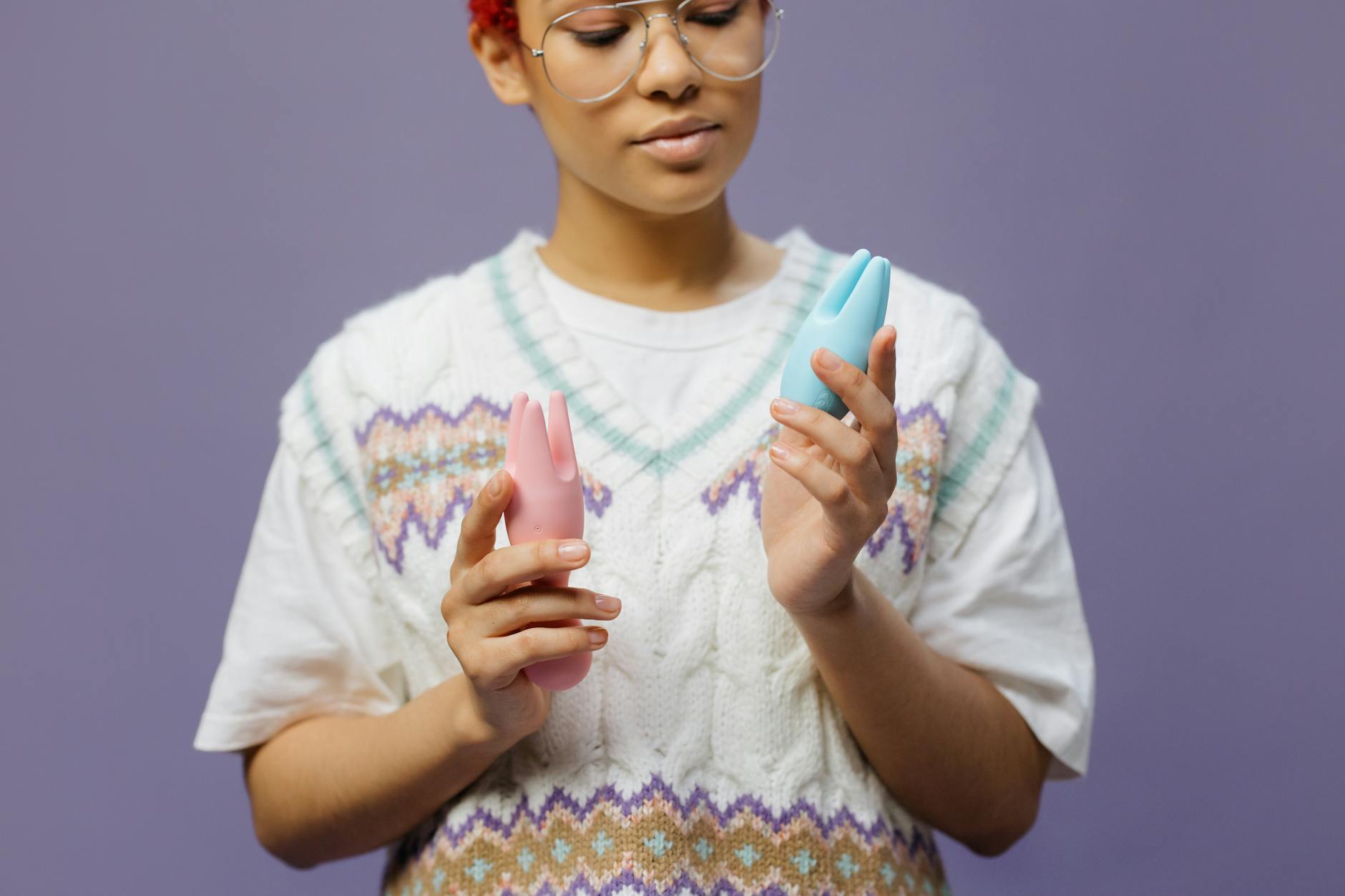
How to Use Lemon Vibrators When You're Rebuilding Pleasure After Perimenopause
Let's start with the honest part. Perimenopause isn't menopause. It's the five-to-ten-year stretch before your period stops where your body feels like it's playing roulette with your own nervous system. Hormones spike and crash unpredictably. Sensation changes week to week. Lubrication becomes inconsistent. And pleasure, which used to be straightforward, suddenly requires a map.
Most conversations about pleasure and hormones skip right over perimenopause entirely. Everyone talks about pre- or post-, but nobody talks about during. That's the problem. Perimenopause is its own thing, with its own challenges, and it deserves its own toolkit.
Here's what I've learned working with people navigating this phase: the right tool, used the right way, can make the difference between feeling disconnected from your body and actually enjoying the process of rediscovery.
Why perimenopause changes how pleasure feels
During perimenopause, estrogen doesn't just drop. It fluctuates wildly. Some weeks it's high, some weeks it crashes, and your brain and body are constantly recalibrating to whatever hormone level you're running that day. This creates a compounding problem.
Estrogen affects vaginal tissue thickness, lubrication, blood flow to the clitoris, and how quickly your nervous system responds to touch. When estrogen is swinging between peaks and troughs, all of that is changing constantly. You might feel highly sensitive one week and completely numb the next. You might need fifteen minutes of warm-up one day and forty-five the next.
The clitoris itself doesn't change structure during perimenopause, but how much blood flows to it does. Less consistent blood flow means less consistent sensation. Add that to the fact that you're also managing hot flashes, sleep disruption, and cognitive fog, and you're not just rebuilding pleasure. You're rebuilding it while your nervous system is exhausted.
What lemon vibrators do differently during this phase
Traditional vibrators rely on speed and friction to create sensation. During perimenopause, when your tissue is more delicate and your nervous system is already overstimulated, that approach backfires. You end up numb instead of turned on.
Lemon clitoral vibrators, particularly suction-based designs, work on a completely different principle. Instead of vibration alone, they create a gentle pressure and release pattern that stimulates nerves without requiring the kind of intensive friction that numbs sensitive tissue. For people in perimenopause, this is the difference between feeling something and feeling nothing.
The suction pattern is also gentler on tissue that's thinner due to lower estrogen. You get strong, clear sensation without pain or irritation. And because the stimulation is more concentrated and focused, you need less overall intensity to trigger a response.
Building a perimenopause-specific routine
Rediscovering pleasure after hormonal shift doesn't happen through one perfect session. It happens through consistency and paying attention to what your body needs on any given day. Here's how to structure it.
First, check in before you start. Spend two minutes noticing where you are. Are you well-hydrated? Did you sleep? Is your pelvic floor tense? This takes sixty seconds and changes everything about what's going to work for you that day. Some days you need twenty minutes of warm-up. Some days you need two.
Use water-based lubricant, always. Perimenopause often means less natural lubrication. This isn't weakness. This is biology. A good water-based lube (not oil-based, which can degrade silicone) means tissue comfort and sensation clarity. Apply it generously. Comfort removes mental friction, which is half the battle during hormonal transition.
Start at a lower intensity setting. If your Lem vibrator has multiple settings, begin at pattern one or two. Build from there. Your nervous system during perimenopause is already managing a lot. You don't need to push it. In fact, gentler stimulation often produces stronger sensation because you're not immediately numbing the area.
Set a realistic time window. Arousal during perimenopause takes longer. Budget twenty to thirty minutes instead of expecting a five-minute result. This removes pressure, which paradoxically makes everything easier. Your brain is less in goal-pursuit mode and more in sensation mode. That's where pleasure lives.
Managing the inconsistency
One of the hardest parts of perimenopause isn't the physical changes. It's the unpredictability. Something that felt amazing last week might feel wrong this week. Your body changed, not your desires. The distinction matters.
When sensation feels off on a particular day, your instinct is usually to push harder or get frustrated. Resist that. Instead, shift to exploration mode. Maybe higher intensity doesn't work, but a different pattern does. Maybe longer warm-up time helps. Maybe you need to be in a different position or your lemon clitoral vibrator needs a different angle against your body.
This sounds like work, but it's actually permission to know your body differently. Perimenopause forces you to stop on autopilot and start paying attention. Most people find that genuinely rewarding once they stop resisting it.
When to layer in partner connection
If you're partnered, perimenopause often coincides with shifts in how you relate sexually. Longer arousal time isn't a bug. It's an opportunity to reframe foreplay. You might discover that what works is less about penetration and more about extended clitoral stimulation with lemon vibrators alongside partner touch.
The key conversation happens before you're in the moment. "My body is responding differently right now" is information, not rejection. Help your partner understand that slower and longer often works better than faster and more intense. A lemon clitoral vibrator isn't replacing them. It's adding a layer of sensation that your body needs during this particular phase.
Tracking what actually works
Here's something nobody talks about that changes everything: keep a one-line note about what worked. Not a diary. Just a note. "Pattern two, twenty minutes, evening." "Pattern three with lube, morning light, tight pelvic floor today." You're building a map of your body's preferences during this fluctuating phase.
After a few weeks, patterns emerge. You'll notice that certain times of day work better, or certain settings, or certain conditions. That data makes the next session easier. You're not starting from scratch every time. You're refining based on what you've actually learned about how your body works right now.
When something else might be worth exploring
If you've tried this approach for four to six weeks and sensation is still completely absent, or if pain appears where there wasn't any before, that's a sign to talk to your doctor. Genitourinary syndrome (changes in vaginal tissue and lubrication related to lower estrogen) is common during perimenopause and highly treatable. Topical estrogen creams can transform the experience in weeks.
If desire has disappeared entirely, that's also worth mentioning to your healthcare provider. Low desire during perimenopause is often multifactorial. It might be hormone-related, stress-related, or relationship-related. Or all three. Your doctor can help sort that out.
The permission to rebuild
Perimenopause isn't a waiting room before menopause. It's a season with its own texture and requirements. Your pleasure doesn't end here. It reorganizes. And when you have the right tools, like lemon vibrators designed for sensitive, fluctuating tissue, you often discover that rebuilding is more interesting than you expected.
You're not going backward. You're going deeper into what actually works for your body right now. That's not loss. That's evolution.
People also ask
How long does it take to rebuild sensation after hormonal changes?
There's no standard timeline because perimenopause affects everyone differently. Most people notice clearer patterns after four to six weeks of consistent exploration. Some feel shifts within days. The key is regularity over perfection. You're teaching your nervous system to respond to a new set of hormonal conditions. That takes gentle repetition, not intensity.
Can I use a regular vibrator during perimenopause, or do I need a lemon clitoral vibrator specifically?
You can use any vibrator. Some people find regular vibrators work fine throughout. Others find that suction-based designs like lemon vibrators feel better because they create sensation without intense friction. The difference matters most if you have tissue sensitivity or if high-frequency vibration numbs you. Try what you have. If it's not delivering sensation, experiment with something that uses a different mechanism. Your body will tell you what works.
Should I use lube with a lemon clitoral vibrator during perimenopause?
Yes. Water-based lube is standard practice during perimenopause because natural lubrication is less reliable. It's not just comfort. It changes how sensation travels through tissue. Lube allows the vibrator to move smoothly against your skin without dragging, which actually makes sensation clearer. Use it generously.
What if my partner wants to have sex but I don't feel ready during perimenopause?
That's a conversation that starts outside the bedroom. Perimenopause changes desire, arousal timing, and comfort. Those are real shifts, not rejections. Tell your partner what you need: more time, different stimulation, a certain approach. Use lemon vibrators as part of that conversation. They give you a way to explore together and take pressure off penis-in-vagina penetration as the only goal. Rebuilding pleasure during perimenopause often means rebuilding how you define sex together.
How do I know if I should talk to my doctor about what I'm experiencing?
If sensation is gone after consistent effort, if pain appears, or if desire has completely disappeared, mention it. You should also talk to your doctor if hot flashes or sleep disruption are so severe they're affecting your ability to be present during sex. There are treatments that help. Perimenopause isn't something you just have to white-knuckle through. Medical support exists.
Is using a lemon vibrator during perimenopause normal?
Completely. People have been adapting their pleasure practices to their bodies' changes for as long as pleasure has existed. Perimenopause is a specific set of conditions that sometimes requires different tools. Using a lemon clitoral vibrator is as normal as adjusting your diet when your digestion changes or your exercise routine when your joints hurt. It's self-knowledge.
Moving forward
Perimenopause forces you to pay attention in a way you might not have for years. That attention, while sometimes frustrating, is also an opportunity. You're learning your body's actual preferences instead of assumptions you've carried forward. And when you have the right tools and the right information, you often find that pleasure during this phase is worth the recalibration.
If you're unsure where to start or want personalized guidance on rebuilding pleasure during perimenopause, we're here to help. Reach out at The Lemon Sex Toys and let's figure out what's right for your body right now.